

Best Pool Monitors for Saltwater Pools
Explore the top automated pool monitors for saltwater pools, ensuring optimal water chemistry and easy maintenance in Australian conditions.
Last Updated:
Oct 23, 2025
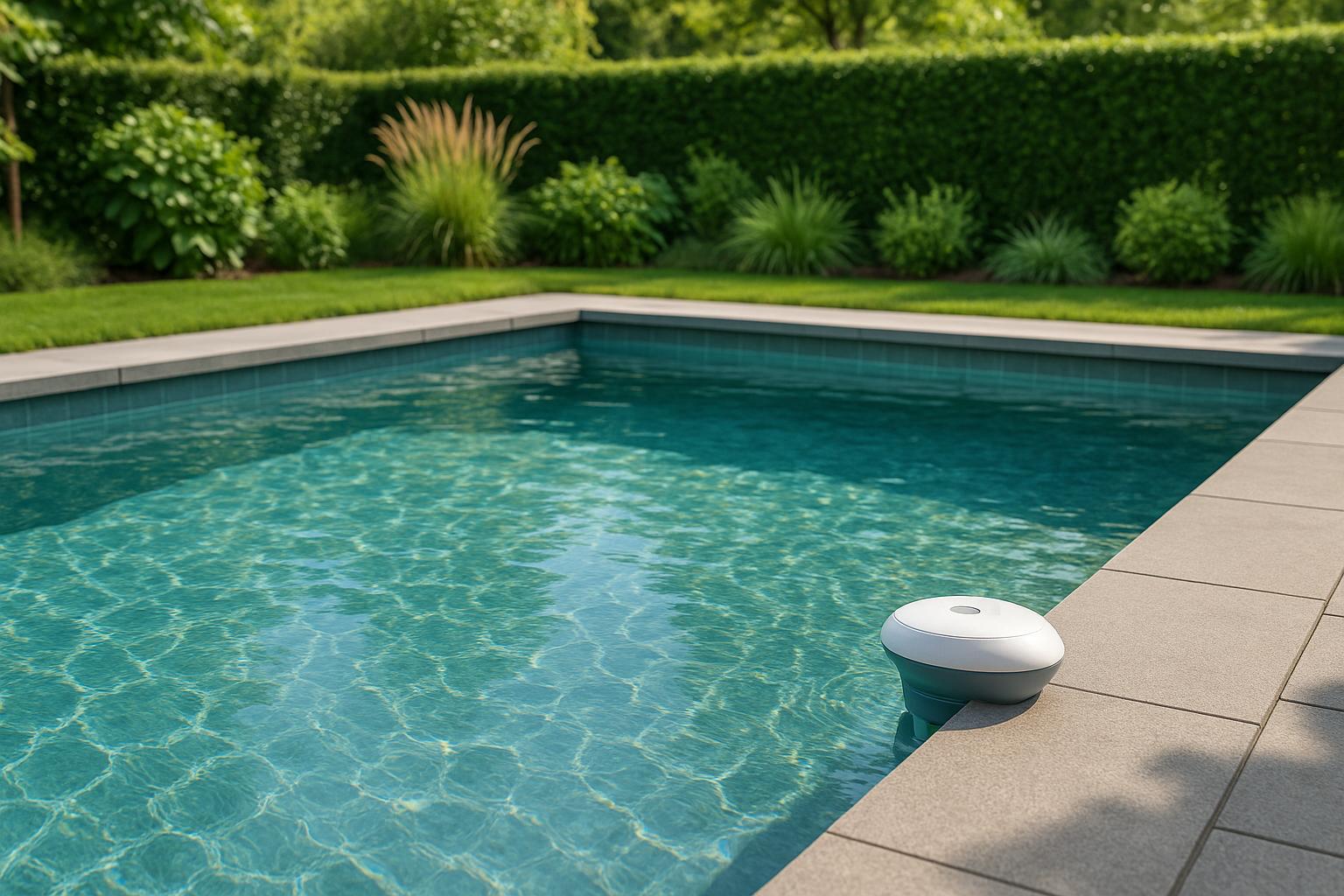
Saltwater plunge pools need precise monitoring to keep water chemistry balanced. Automated pool monitors save time, reduce errors, and prevent costly damage by tracking key metrics like salinity, pH, and chlorine levels. Here’s a quick breakdown of the best options for Australian saltwater pools:
Aiper HydroComm 5-in-1: Tracks five parameters, integrates with an app, and costs AUD $400–$700.
UniSA/Tekelek Lab-on-a-Chip Sensor: Offers lab-grade accuracy but is priced higher at AUD $1,500–$2,500.
AstralPool Blue Connect: Monitors four parameters, user-friendly, and priced at AUD $500–$700.
Flipr: A floating device that tracks water quality for AUD $400–$700.
Hanna Instruments BL120: High-precision monitoring with automated dosing, costing AUD $2,200–$2,800.
Rippleside Pools Systems: Combines monitoring and dosing, priced at AUD $1,500–$4,000.
Quick Comparison
Monitor | Key Features | Price (AUD) | Best For |
|---|---|---|---|
Aiper HydroComm | Tracks 5 metrics, app integration | $400–$700 | Homeowners with tech needs |
UniSA/Tekelek Sensor | Lab-grade accuracy, multi-parameter | $1,500–$2,500 | Research or precision users |
AstralPool Blue Connect | Wireless, easy to install | $500–$700 | General users |
Flipr | Floating, real-time monitoring | $400–$700 | Casual pool owners |
Hanna Instruments BL120 | Automated dosing, high precision | $2,200–$2,800 | Commercial pools |
Rippleside Pools Systems | Monitors + dosing | $1,500–$4,000 | Premium setups |
Choose a monitor based on your budget, pool size, and maintenance needs. Automated systems simplify pool care, ensuring safe, balanced water all year round.
SMART POOL LAB! AIPER HydroComm 24/7 Pool Monitor REVIEW! 💧☀️
1. Aiper HydroComm 5-in-1 Smart Pool Water Quality Monitor
The Aiper HydroComm 5-in-1 Smart Pool Water Quality Monitor is a handy tool for keeping saltwater plunge pools in Australia in top shape. Designed with advanced sensors, it simplifies water quality monitoring, especially in conditions where evaporation can quickly impact salt levels.
Measured Parameters
This device keeps tabs on five essential water quality metrics: pH, ORP (Oxidation-Reduction Potential), EC (Electrical Conductivity), TDS (Total Dissolved Solids, including salt levels), and temperature. For saltwater pools, the TDS and EC sensors are game-changers. They provide precise measurements of salt concentration, ensuring your salt chlorinator stays within the ideal range of 2,700–3,400 ppm. This makes it easier to maintain the perfect water balance.
Saltwater Compatibility
Specifically designed for saltwater systems, the HydroComm excels even under challenging conditions like rapid evaporation during Australia's hot summers. It ensures consistent salt levels, allowing your salt chlorinator to work efficiently. Plus, its performance integrates effortlessly with modern remote monitoring systems.
Remote Monitoring Features
Thanks to the Aiper mobile app, you can monitor real-time water quality data, receive water quality scores, and access expert advice. The app also tracks trends over daily, weekly, and monthly periods, helping you stay ahead with maintenance. On top of that, it doubles as a control hub for Aiper pool cleaners, letting you check their status, switch cleaning modes, or even summon the robot back with just one tap.
Price Range (AUD)
The HydroComm 5-in-1 is priced between AUD $400 and $700. While it’s a bigger upfront cost compared to basic test kits, its detailed monitoring capabilities and remote access features make it a worthwhile investment for pool owners looking for convenience and precision.
2. UniSA/Tekelek Lab-on-a-Chip Sensor

The UniSA/Tekelek Lab-on-a-Chip Sensor brings a new level of precision to pool water monitoring. This cutting-edge device, developed by the University of South Australia in partnership with Tekelek, uses advanced microfluidic technology to deliver lab-quality water analysis directly to your saltwater plunge pool. Below, we explore its standout features, compatibility with saltwater systems, and its benefits for Australian pool owners.
Measured Parameters
This sensor provides an in-depth analysis of water quality by measuring pH, free chlorine, total alkalinity, calcium hardness, and salinity with remarkable accuracy. By relying on lab-on-a-chip technology, it condenses laboratory-grade testing into a compact design, requiring only small amounts of reagents and delivering results in under five minutes. For saltwater plunge pools, the ability to monitor salinity levels is particularly useful, as maintaining proper salinity ensures efficient chlorination. The sensor’s ability to track multiple parameters simultaneously offers a complete picture of your pool’s water chemistry, simplifying maintenance.
Saltwater Compatibility
Designed specifically to handle high-salinity environments, this sensor performs reliably in Australian saltwater plunge pools. Its durable construction is built to withstand harsh outdoor conditions, including intense UV exposure, making it ideal for Australian climates. With saltwater pools becoming increasingly popular due to their lower maintenance needs and softer water feel, this sensor is a perfect match for modern pool systems.
Remote Monitoring Features
The sensor’s ability to provide real-time data and alerts through connected devices makes it a game-changer for both residential and commercial pool owners. It integrates seamlessly with automated dosing systems and pool controllers, enabling adjustments to salt, pH, and chlorine levels based on live data. This automated functionality supports proactive maintenance, ensuring your pool stays in top condition with minimal effort.
Price Range (AUD)
As of late 2025, the UniSA/Tekelek Lab-on-a-Chip Sensor isn’t widely available for retail purchase, with pricing typically offered on a quote basis for commercial or bulk orders. Early deployments in Australia suggest a price range of AUD $1,500–$2,500 per unit, depending on the configuration. While this is a higher upfront cost compared to basic systems, its precision and automated features make it a worthwhile investment for those seeking advanced monitoring solutions. For the latest updates on availability and pricing, Plunge Pools Australia is a trusted source for information on high-tech pool monitoring options.
3. AstralPool Blue Connect

The AstralPool Blue Connect, created by Fluidra, is a smart device that continuously monitors the water quality of saltwater plunge pools and sends real-time updates straight to your smartphone. It's also featured on Plunge Pools Australia, a trusted directory for plunge pool solutions, highlighting its popularity and compatibility with Australian pool systems. Like other advanced water monitors, Blue Connect provides essential insights to help you maintain the right balance in your saltwater pool.
Measured Parameters
The Blue Connect keeps track of four key water parameters: pH, ORP (oxidation-reduction potential), water temperature, and conductivity. ORP readings are particularly useful, as they reflect the effectiveness of your chlorine levels, ensuring your saltwater chlorination system is performing as it should. Conductivity, on the other hand, helps estimate salinity levels, which is crucial for maintaining the ideal salt concentration of 3,000 to 8,000 ppm. Together, these measurements give you a clear picture of your pool's overall health, with alerts to notify you of any changes in salt or pH levels.
Saltwater Compatibility
Designed to handle Australia's tough climate, including intense UV exposure and fluctuating temperatures, the Blue Connect works seamlessly with both traditional chlorine and saltwater pools. It's particularly suited to Australian saltwater plunge pools, where maintaining salinity around 4,000 ppm is key for optimal performance of salt chlorinators.
For example, a Sydney homeowner installed the Blue Connect in a 20,000-litre saltwater plunge pool and received consistent, reliable daily readings. After a period of heavy rain, the device detected low salt levels and provided precise dosing recommendations to restore balance. This kind of proactive monitoring not only prevents reduced chlorine production but also protects the salt cell from potential damage.
Remote Monitoring Features
The Blue Connect app simplifies pool management by centralising all monitoring functions. You can check your pool's status remotely, receive instant alerts, and access detailed trend logs to support preventative maintenance. The device also integrates with select smart home platforms and pool automation systems for added convenience.
Price Range (AUD)
In Australia, the AstralPool Blue Connect typically costs between AUD $500 and $700, depending on the retailer and any included accessories. While the upfront cost may seem high, many users find it well worth the investment for the convenience and improved water quality it delivers. Keep in mind that there are ongoing costs, such as replacement sensors and optional subscription fees for premium app features, which can add around AUD $50–$100 per year. Some Australian retailers also offer bundled packages that include installation or extra sensors, providing additional value by reducing the need for manual testing and extending the life of your salt chlorinator.
4. Flipr Automated Pool Water Monitoring System

Flipr is a clever floating device designed to monitor the water quality of Australian saltwater plunge pools continuously. Unlike fixed systems, Flipr floats on the pool's surface, ensuring it stays in constant contact with the water to provide accurate, real-time measurements.
What Flipr Monitors
Flipr keeps an eye on four key water quality parameters:
pH: Maintains an optimal range of 7.2–7.8, though it can measure within a broader range of 6.5–8.5.
Temperature: Displays readings in Celsius.
ORP (Oxidation-Reduction Potential): Helps assess water sanitisation levels.
Conductivity: Used to estimate salinity, ideally between 2,700–3,400 ppm.
Ideal for Saltwater Pools
Built specifically for saltwater environments, Flipr's floating design ensures its sensors remain submerged at all times. This makes it an excellent match for pools using salt chlorination systems. It’s also durable enough to handle high salinity levels and withstand harsh outdoor conditions.
Monitor Your Pool from Anywhere
Flipr connects to a dedicated mobile app, allowing pool owners to access real-time data, receive alerts, and get maintenance tips no matter where they are. The app sends push notifications when water quality drifts outside the ideal ranges, helping to prevent chemical imbalances and protect your pool equipment. Some Flipr models even integrate with smart home systems or pool automation setups, offering a seamless, connected pool management experience.
Pricing in Australia
In Australia, Flipr devices are priced between AUD $400 and $700, depending on the model and its features. Some versions may require a subscription for premium add-ons like advanced analytics or enhanced notifications. It’s also worth noting that replacement sensors or calibration solutions might add to the long-term costs. For the most accurate pricing and deals, checking local directories is recommended.
Next, let’s explore another advanced solution for automated pool care.
5. Hanna Instruments BL120 Swimming Pool Controller
The Hanna Instruments BL120 Swimming Pool Controller is a high-performance device designed for precise management of pool water chemistry. Unlike basic monitoring systems, it actively adjusts chemical levels, making it a trusted choice among Australian pool professionals, especially for saltwater environments.
Measured Parameters
This system tracks pH, oxidation-reduction potential (ORP), and temperature, ensuring your pool maintains the ideal water balance. When pH levels shift outside the set range, the controller activates dosing pumps to add acid or base as needed. ORP monitoring, crucial for saltwater pools using chlorination, measures the sanitisation effectiveness of the system. Temperature data is also captured, as it impacts both chemical balance and swimmer comfort.
With the ability to log up to 1,000 data points per parameter, the BL120 provides a detailed record for troubleshooting and compliance. This feature is particularly valuable for commercial pool operators in Australia, where maintaining strict standards is essential.
Saltwater Compatibility
Built to withstand Australia's harsh conditions, the BL120 features corrosion-resistant materials and durable ORP electrodes made with gold or platinum components. Its construction is specifically designed to handle high salinity and outdoor exposure, making it ideal for saltwater pools and plunge pools in Australia.
The controller integrates seamlessly with salt chlorinator systems, ensuring consistent water quality. Its automated dosing system is particularly beneficial for saltwater pools, as fluctuations in pH and ORP can affect the efficiency of chlorine production. This durability and adaptability make it a reliable choice for managing pools exposed to Australia's challenging climate.
Remote Monitoring Features
The BL120 doesn't just manage your pool - it keeps you informed no matter where you are. With remote access via web and mobile apps, Australian pool owners can monitor water quality and receive real-time alerts if parameters fall outside acceptable ranges. This feature is perfect for those who travel often or oversee multiple properties.
The system also integrates with broader pool automation setups through relay outputs and RS485 communication ports. This allows you to synchronise water quality management with other pool functions like lighting, heating, and filtration, streamlining overall operation. These advanced features position the BL120 as a premium choice for pool automation.
Price Range (AUD)
In Australia, the Hanna Instruments BL120 Swimming Pool Controller typically costs between AUD $2,200 and $2,800, depending on the configuration and supplier. The price reflects its professional-grade construction and advanced features. Additional costs may apply for accessories like dosing pumps, sensors, or installation services.
Installation expenses depend on the complexity of your pool setup. Local installers and technical support are available across Australia, ensuring smooth setup and ongoing maintenance. Regular upkeep includes sensor calibration, cleaning, and occasionally replacing dosing pump tubing or electrodes. Hanna Instruments provides robust support through authorised distributors, ensuring you have access to technical assistance and replacement parts when needed.
6. Rippleside Pools Smart Control & Dosing Systems
Rippleside Pools Smart Control & Dosing Systems take pool maintenance to the next level by continuously monitoring and adjusting water chemistry. This combination of monitoring and dosing ensures ideal conditions for saltwater plunge pools.
What They Measure
These systems keep an eye on key water quality parameters, including salinity, pH, free chlorine, and water temperature. Some advanced models go further, measuring ORP (oxidation-reduction potential) and total dissolved solids (TDS) as well. Maintaining salinity levels between 2,700–3,400 ppm is especially important for the efficient operation of salt chlorinators.
Built for Saltwater Pools
Designed to complement salt chlorinators, these systems automatically dose the necessary chemicals to keep salinity and other factors in balance. This precision not only helps prevent equipment problems but also ensures a more comfortable swimming experience.
Stay Connected Anywhere
With remote access features, you can monitor your pool’s data in real time using your smartphone or a web interface. Alerts and dosing schedules can be adjusted on the go, making pool maintenance more convenient than ever.
Price Range in Australia
In Australia, the cost of Rippleside Pools Smart Control & Dosing Systems typically falls between AUD $1,500 and $4,000. The price depends on the model’s features, including the number of parameters it monitors and its integration capabilities. Keep in mind that installation and regular sensor calibration will add to the overall expense.
Advantages and Disadvantages
After reviewing individual pool monitors, it’s helpful to weigh their strengths and weaknesses to determine which system suits different needs. Each monitor offers its own set of benefits and limitations, making it essential to match features with your budget and requirements for saltwater plunge pools.
The Aiper HydroComm 5-in-1 stands out with its ability to monitor five crucial parameters – pH, ORP, EC, TDS, and temperature – while running on solar power. Its solar operation cuts electricity costs and ensures continuous performance. However, it relies heavily on app connectivity, meaning a stable internet connection is a must.
AstralPool Blue Connect delivers reliability through its wireless design and widespread dealer support. Installation is simple, making maintenance less of a hassle. On the downside, regular battery replacements and potential subscription fees for advanced app features could add to the cost over time.
For those prioritising precision, the Hanna Instruments BL120 offers lab-grade accuracy and automated dosing, making it ideal for larger or commercial pools where accuracy is critical. However, its higher price and complex installation process might deter residential users.
The UniSA/Tekelek Lab-on-a-Chip Sensor brings compact, research-grade precision to the table. Unfortunately, its limited availability and lack of consumer support make it more suitable for specialised research rather than everyday pool maintenance.
Finally, Rippleside Pools Smart Control & Dosing Systems combines automated monitoring with precise chemical dosing, tailored for Australian conditions. While these systems are perfect for high-end or custom installations, they require professional installation and ongoing calibration.
Monitor | Key Advantages | Main Disadvantages | Best For |
|---|---|---|---|
Aiper HydroComm | Solar-powered, monitors 5 parameters, app integration | Higher price, app dependency | Tech-savvy homeowners |
AstralPool Blue Connect | Wireless, local support, easy to install | Battery replacement, subscription fees | General Australian users |
Hanna BL120 | Lab-grade accuracy, automated dosing | Expensive, complex installation | Commercial pools |
UniSA/Tekelek | Compact, precise | Limited availability, minimal support | Research purposes |
Rippleside Systems | Automated dosing, Australian-focused design | Requires professional installation | Premium setups |
Beyond these specific features, broader factors like cost, climate adaptability, and ease of use play a role in choosing the right monitor.
Entry-level monitors are often priced under AUD $200, while more advanced smart systems fall between AUD $400–$700. Professional-grade monitors come with higher costs due to their enhanced functionality and installation requirements.
Australia’s diverse climate also makes durability a key consideration. Solar-powered options like the Aiper HydroComm offer dependable performance, while wireless systems simplify outdoor setups.
Ease of use varies widely. Wireless, plug-and-play monitors are great for casual users, while professional systems demand more technical know-how and regular upkeep.
These comparisons underline how each system caters to the unique needs of Australian saltwater plunge pools. By understanding these trade-offs, you can select a monitor that ensures crystal-clear water and a longer life for your pool.
Conclusion
Selecting a pool monitor that matches your technical requirements and can handle Australia's challenging climate is key. Top options like the Aiper HydroComm, AstralPool Blue Connect, and Hanna Instruments BL120 stand out for their ability to track critical metrics such as pH, ORP, EC, TDS, and temperature, ensuring your pool water stays clean and safe.
Accurate monitoring helps maintain the right chemical balance. Keeping salt levels between 2,700–3,400 ppm, pH within 7.2–7.8, and free chlorine at 1–3 ppm not only protects your pool equipment but also reduces health risks. In Australia's harsh weather conditions, it's crucial to invest in a monitor that’s built to last and can perform reliably outdoors.
Durability is another factor that sets some monitors apart. Not all are equally suited for saltwater pools. Features like temperature compensation, high waterproof ratings, and solar power make certain devices better choices for Australian plunge pools. Additionally, monitors offering real-time data, app connectivity, and automated dosing can cut chemical use and maintenance time by as much as 30%.
Prices can vary widely, with professional-grade monitors costing more upfront. However, these models often deliver advanced features ideal for larger or commercial pools, making them a worthwhile investment for specific needs.
For expert advice tailored to Australian conditions, Plunge Pools Australia is a trusted resource. Their directory connects homeowners with certified local suppliers and installers who meet Australian standards. By consulting Plunge Pools Australia, you can access personalised guidance to help you choose the right system and keep your saltwater plunge pool sparkling all year round.
FAQs
What are the main advantages of using automated pool monitors for saltwater pools in Australia?
Automated pool monitors take the stress out of keeping your saltwater pool in top condition. These clever systems constantly measure crucial factors like salinity, pH levels, and temperature, making sure your pool remains clean, safe, and inviting for a swim.
By handling routine checks for you, these monitors not only save time but also eliminate the guesswork from pool maintenance. They can even help you dodge expensive repairs by flagging issues early - like unbalanced water chemistry or equipment glitches. For Australian pool owners, this means less time spent on maintenance and more time relaxing in the pool, especially during those scorching summer days.
What should I consider when choosing a pool monitor for my saltwater plunge pool?
When choosing a pool monitor for your saltwater plunge pool, it’s essential to focus on what works best for your needs. Think about factors like how easy it is to use, how well it tracks water quality, and whether it can integrate seamlessly with your current setup. Setting a budget beforehand can also help you compare features that align with your lifestyle and how much maintenance you’re comfortable with.
Key considerations include compatibility with saltwater systems, the ability to withstand Australia's tough weather conditions, and energy efficiency. A dependable monitor can save you both time and effort, keeping your pool clean, safe, and ready to enjoy all year.
Are there any extra costs or maintenance involved with using saltwater pool monitoring systems?
Yes, saltwater pool monitoring systems do come with some ongoing costs and upkeep. Periodic calibration is often necessary, along with replacing components like sensors or probes from time to time. You might also need to update the software occasionally to keep the system running smoothly and accurately.
On top of that, regular cleaning and servicing are essential to maintain the system's efficiency - especially in Australia's climate, where saltwater pools are a popular choice. To get the best results and avoid surprises, refer to the manufacturer's maintenance recommendations and consider these expenses when selecting a system.