

Energy Savings with Plunge Pools: Facts
Explore how plunge pools provide significant energy savings, lower costs, and reduced environmental impact compared to traditional pools.
Last Updated:
Oct 21, 2025
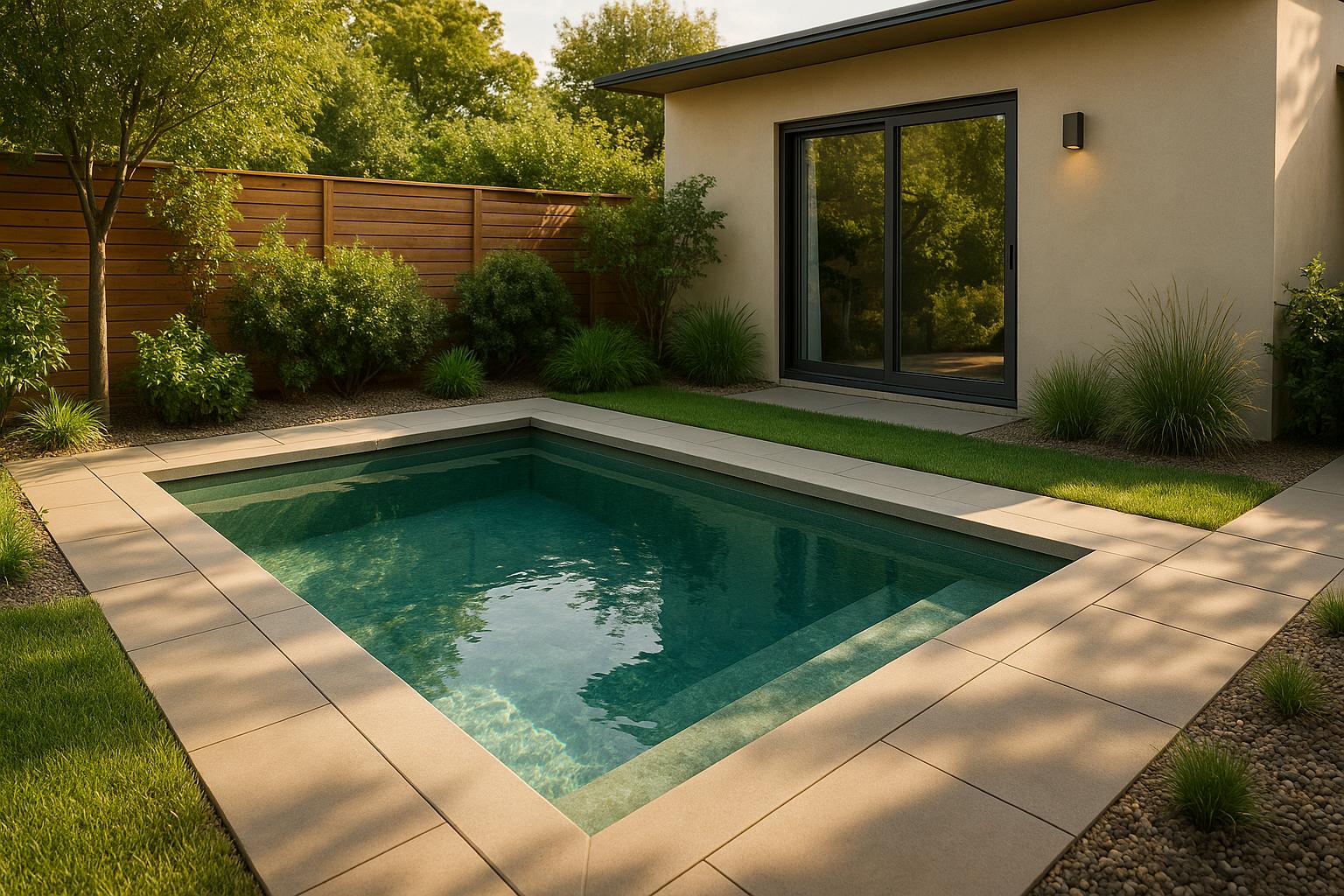
Plunge pools are a smart way to save energy, cut costs, and reduce carbon emissions compared to larger pools. Their compact size means they use less water, require smaller pumps, and lose less heat, making them a practical choice for Australian homes. Here's what you need to know:
Energy Use: Plunge pools use 60–80% less energy than larger pools, saving up to 1,740 kWh annually - about $486 off your electricity bill.
Water Volume: They hold only 10,000–15,000 litres versus 40,000–60,000 litres in standard pools, reducing heating and chemical needs.
Heating Options:Solar heating and heat pumps can cut heating costs by up to 75%.
Costs: Installation ranges from $3,000 to $40,000, but long-term savings on energy, water, and maintenance make them a sound investment.
Environmental Benefits: Lower energy and water usage mean fewer emissions and better drought management.
Plunge pools are ideal for urban backyards, offering a low-maintenance, cost-effective way to enjoy year-round relaxation while keeping your bills and environmental impact low.
Can A Plunge Pool be Heated | How can a Plunge Pool be Used in a Cold Winter | Heated Plunge Pool
Why Plunge Pools Use Less Energy
Plunge pools are an energy-efficient choice for Australian homeowners, offering a practical way to save on energy bills while reducing environmental impact. Their efficiency can be attributed to three main factors: smaller water volume, compact design that limits heat loss, and compatibility with energy-saving heating systems.
Less Water, Lower Energy Use
One of the biggest advantages of plunge pools is their smaller water volume. While a standard pool can hold over 40,000 litres of water, plunge pools typically hold between 10,000 and 15,000 litres. Fewer litres of water mean less energy is needed to heat it - up to 80% less, in fact, which translates to significant savings on heating costs.
Smaller water volumes also mean smaller, more efficient pumps can be used. For instance, a standard pool might require a 1 kW pump running for several hours a day, but a plunge pool can achieve the same filtration results with a lower-wattage pump operating for shorter cycles. According to the Pool Efficiency Program in Australia, this can save households around 1,740 kWh annually - roughly $486 off electricity bills - and reduce CO2-e emissions by 1.67 tonnes per year. Beyond just water and pump efficiency, the compact design of plunge pools further enhances their energy-saving potential.
Compact Design Minimises Heat Loss
The smaller size of plunge pools plays a key role in reducing heat loss. With less surface area exposed to the air, heat escapes more slowly through evaporation and convection. This makes it easier - and cheaper - to maintain a comfortable water temperature.
Homeowners can further minimise heat loss by incorporating proper insulation. Options like in-ground installation, insulated walls, and thermal pool covers help retain warmth. Insulating exposed pipework and situating the pool in a sheltered location can also create a thermal barrier, reducing heat loss during cooler months and improving overall energy efficiency.
Efficient Heating Options
Plunge pools are particularly well-suited to energy-efficient heating methods such as solar heating and modern heat pumps. These systems offer substantial long-term savings while reducing environmental impact. For example, advanced heat pumps can cut heating costs by up to 75% compared to traditional electric heaters. Similarly, variable-speed pumps, which use up to 83% less energy than single-speed models, add another layer of efficiency.
Australian standards like AS3633 recommend filtering the entire pool volume once per day. Thanks to their smaller size, plunge pools require much less energy to meet this standard, making them a smart choice for homeowners looking to save on electricity without compromising on performance.
Plunge Pools vs Standard Pools: Energy Comparison
When it comes to energy efficiency, plunge pools clearly outshine standard pools. Not only do they help lower electricity bills, but they also reduce environmental impact. These smaller systems offer a distinct advantage, especially when you consider ongoing maintenance and chemical use.
Energy and Water Usage at a Glance
Australian studies, including those from UNSW and the CRC for Low Carbon Living, reveal just how much more efficient plunge pools are compared to their standard counterparts. Here's a quick breakdown:
Pool Type | Annual Energy Use (kWh) | Heating Cost (AUD) | Water Volume (L) |
|---|---|---|---|
Standard Pool | 2,000+ | $600–$1,200 | 40,000–60,000 |
Plunge Pool | 400–500 | $120–$300 | 6,000–15,000 |
For example, a standard pool with a 1 kW pump can consume over 2,000 kWh annually. In contrast, plunge pools slash this number to just 400–500 kWh. Heating demands tell a similar story: solar systems for standard pools might use around 0.75 kW and 6 kWh daily during the swimming season, while plunge pools require far less energy thanks to their smaller size.
Lower Maintenance and Chemical Costs
Plunge pools don’t just save on energy - they also cut down on maintenance and chemical expenses. With their reduced water volume, they use up to 50–70% fewer chemicals for water treatment. This not only lowers the cost of chemicals but also reduces strain on filtration systems, further enhancing their efficiency.
For Australian homeowners dealing with rising energy prices and water restrictions, plunge pools offer a practical and cost-effective solution. They deliver savings across the board - financially and environmentally - making them an appealing choice for modern households.
Money Saved and Climate Benefits
Thanks to their energy-efficient design, plunge pools offer Australian homeowners a combination of long-term savings and environmental advantages. With utility costs climbing and sustainability becoming a priority, plunge pools stand out as a practical and eco-conscious choice.
Lower Utility Bills and Running Costs
One of the standout benefits of plunge pools is their affordability when it comes to ongoing expenses. They use significantly less water, which means lower water bills and reduced maintenance costs. Plus, because they require fewer chemicals for upkeep, routine maintenance becomes less of a burden on both your wallet and the environment.
Return on Investment (ROI)
Plunge pools typically range in price from $3,000 to $40,000, depending on factors like materials and installation needs. However, the savings from decreased energy, water, and chemical use make them a financially savvy long-term investment. On top of that, their eco-friendly design can enhance your property’s value. By using fewer resources over time, plunge pools not only save money but also contribute to a smaller environmental footprint.
Climate Impact
Plunge pools are a win for the environment too. They consume less energy for heating and filtration compared to traditional pools, which translates to fewer greenhouse gas emissions. In drought-prone areas, their lower water usage aligns perfectly with sustainable water management goals. When paired with renewable energy systems like solar heaters or heat pumps, plunge pools further support Australia's shift toward cleaner energy solutions - all while keeping the water at a comfortable temperature year-round.
Energy Savings and Lifestyle Benefits Summary
Plunge pools bring together energy efficiency, cost savings, and lifestyle perks, making them a smart choice for homeowners. These compact pools use less water and fewer chemicals, which means lower utility bills and reduced maintenance costs. As mentioned earlier, their smaller water volume not only cuts energy consumption but also simplifies upkeep, making daily life a bit easier.
With typical dimensions of 2.4–3.6 m in width and 1.5–1.8 m in depth, plunge pools are designed to minimise water usage, evaporation, and filtration energy. This translates to lower heating and maintenance expenses over time.
While installation costs range from $3,000 to $40,000, the long-term savings from reduced chemical use, smaller heating requirements, and minimal maintenance can quickly add up, making them a financially sound investment.
Plunge pools also offer year-round appeal, especially in Australia's warm climate. They provide a refreshing escape during summer while requiring far less upkeep compared to larger pools.
On top of that, the lower energy and water demands help reduce greenhouse gas emissions and conserve water, which is especially important during droughts. Paired with solar heating, plunge pools align with Australia's shift towards cleaner energy solutions, offering eco-conscious advantages alongside their practical benefits.
For urban homeowners, plunge pools strike the perfect balance between luxury and functionality, turning small courtyards into peaceful, energy-efficient havens.
FAQs
How do the upfront costs of a plunge pool compare to the energy and maintenance savings over time?
Plunge pools might feel like a big expense upfront, but they can actually save you money in the long run. Their compact size makes them more energy-efficient compared to standard pools, which means lower heating and filtration costs. Plus, they use less water and fewer chemicals, keeping maintenance bills down.
For many homeowners, this mix of energy savings and reduced upkeep makes a plunge pool a smart, budget-friendly option over time.
What are the best heating systems for plunge pools to improve energy efficiency?
To get the most out of your plunge pool while keeping energy consumption in check, think about installing a solar heating system. With Australia’s plentiful sunshine, solar heating can help cut down on energy expenses significantly. Another great choice is a heat pump, which offers efficient performance across a range of climates. If you live in a colder area, gas heaters can provide fast heating, though they’re best used sparingly to keep energy use reasonable.
Pairing your heating system with a pool cover is a smart move too. A cover helps trap warmth and reduces heat loss, especially during those cooler nights, making your setup even more efficient.
How can plunge pools help with sustainability and managing drought conditions in Australia?
Plunge pools offer a smart way to conserve water and manage drought conditions, especially in regions with strict water restrictions. Thanks to their compact size, they use far less water than traditional swimming pools, requiring minimal filling and topping up.
On top of that, plunge pools are often more energy-efficient. They demand less heating and upkeep, which helps cut down on energy use and reduces greenhouse gas emissions. For Australian homeowners aiming to save resources and minimise their environmental impact, plunge pools present a practical and eco-conscious choice.